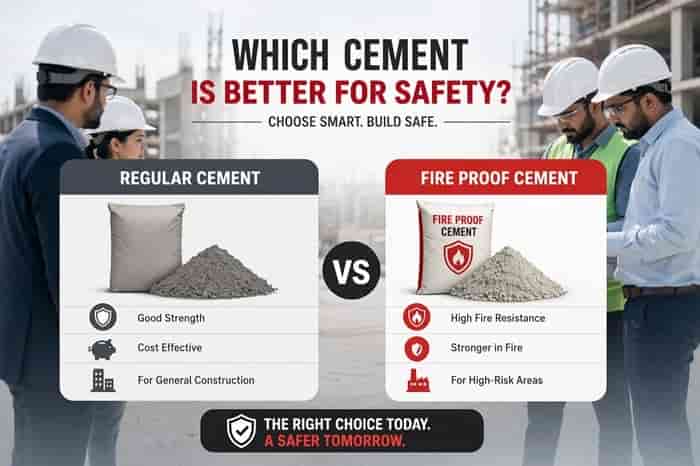
Is Fire Proof Cement Better Than Regular Cement for Safety?
Fire safety has become a major concern in modern construction. Whether you are a homeowner, builder, or engineer, choosing the right materials plays a key role in reducing risk during fire incidents. One common question is whether fireproof cement is a better choice compared to traditional materials. The answer depends on how and where it is used.
This guide explains the difference between materials, their real-world performance, and when each option makes sense.
Also Read : Properties of rapid hardening cement
What Is Fire Proof Cement?
Fire proof cement, often referred to as fire resistant cement, is a specially designed material that can withstand high temperatures without losing its structural strength quickly.
Key characteristics include:
- Heat-resistant compounds and additives
- Lower thermal conductivity
- Better stability under extreme conditions
It is not completely immune to fire, but it slows down structural damage and improves safety.
Also Read : Causes of plastering defects and proper remedies
What Is Regular Cement
Regular cement is widely used in construction and includes common types like:
- Ordinary Portland Cement (OPC)
- Portland Pozzolana Cement (PPC)
These are used in residential buildings, roads, and commercial structures. While regular cement provides strength and durability, it is not specifically designed to resist high temperatures for long durations.
Fire Proof Cement vs Regular Cement: Core Comparison
Understanding the difference between fireproof cement vs regular cement helps in making the right decision.
| Factor | Fire Proof Cement | Regular Cement |
|---|---|---|
| Fire Resistance | High resistance to heat and flames | Limited resistance |
| Heat Tolerance | Can withstand higher temperatures for longer duration | Loses strength faster under heat |
| Strength | Maintains structural integrity during fire exposure | Strong under normal conditions |
| Cost | Higher cost of fireproof cement properties | More affordable |
| Availability | Limited and specialised | Easily available |
This comparison shows that fire-resistant options offer better protection, but at a higher cost.
How Fire Resistance Works in Construction?
Fire safety is not just about cement. It depends on the overall structure and materials used.
Important factors include:
- Fire rating, measured in hours (how long a structure can resist fire)
- Use of multiple fire safety materials construction like fire-resistant walls and coatings
- Structural design that supports evacuation and reduces risk
Cement plays a role, but it works along with other materials and design elements.
Where Fire Proof Cement Is Actually Used
Fire proof cement is mainly used in high-risk environments where heat exposure is expected.
Common applications:
- Industrial buildings and factories
- Power plants and refineries
- Fire-prone zones
- High-temperature environments
In these cases, using cement for fire safety becomes essential for protecting both structure and people.
Is Fire Proof Cement Needed for Homes?
For most residential buildings, using fire proof cement is not always necessary.
Typical home construction uses regular cement along with:
- Fire-resistant coatings
- Quality electrical systems
- Proper ventilation and design
However, fire resistant cement for home may be useful in specific areas like:
- Kitchen zones
- Electrical rooms
- High-risk installations
For most homeowners, the cost-benefit balance should be carefully considered.
Advantages of Fire Proof Cement
Using fire-resistant materials offers clear benefits in certain scenarios.
Key advantages:
- Better resistance to high temperatures
- Reduced structural damage during fire
- Improved safety in industrial and specialised environments
These benefits make it valuable for projects where fire risk is higher than normal.
Limitations of Fire Proof Cement
Despite its advantages, it is important to understand its limitations.
- Higher cost compared to regular cement
- Not always required for standard residential buildings
- It is not completely fireproof
This last point is important. No material can fully prevent fire damage. It can only delay the impact.
Safety Factors Beyond Cement
Cement alone cannot ensure fire safety. A complete approach is required.
Important elements include:
- Fire-resistant bricks and coatings
- Proper electrical safety systems
- Fire exits and evacuation planning
- Smart building design
Using the right combination of materials and design improves overall safety.
Expert Recommendation and Final Verdict
Fire proof cement is a valuable material, but it is not necessary for every project. It is best suited for:
- Industrial and commercial buildings
- High-risk environments
- Areas exposed to extreme heat
For standard residential construction, regular cement combined with good design and safety practices is usually sufficient.
The right approach is to balance cost, risk, and application. Instead of relying on a single material, focus on a complete fire safety strategy. This ensures better protection, long-term durability, and smarter investment decisions.
Frequently Asked Questions
1. Is fireproof cement completely fire resistant?
No, fireproof cement is not completely fire-resistant.
- It is fire-resistant, not fireproof
- It can withstand very high temperatures and slow down fire spread
- But under prolonged or extreme heat, it can weaken, crack, or lose strength
In simple terms:
Fireproof cement gives time and protection, but it does not make a structure immune to fire.
2. Which cement is best for fire safety?
The best cement for fire safety is refractory (heat-resistant) cement.
Top options:
- Refractory / High-alumina cement → Best for high heat (furnaces, chimneys)
- Heat-resistant concrete → Used in buildings and structural areas
- Fiber cement boards → Good for walls and fire-rated panels
Why refractory cement is best:
- Handles 1000°C+ temperatures
- Maintains strength under heat
- Resists cracking and thermal damage
For homes:
Use fire-resistant concrete + proper design + fire-rated materials (not just cement alone).
3. Is fireproof cement worth the cost?
Yes, in most cases, fireproof cement is worth the cost, especially for safety-critical areas.
Why it’s worth it:
- Improves fire safety and slows damage
- Maintains structural stability longer during fire
- Gives more time for evacuation and response
- Reduces long-term repair and risk costs
When it makes the most sense:
- Industrial setups (factories, furnaces)
- Kitchens, chimneys, and fireplaces
- High-rise or commercial buildings
- Fire-prone areas
Important:
It is more expensive than regular cement, but it offers long-term safety and durability benefits.